
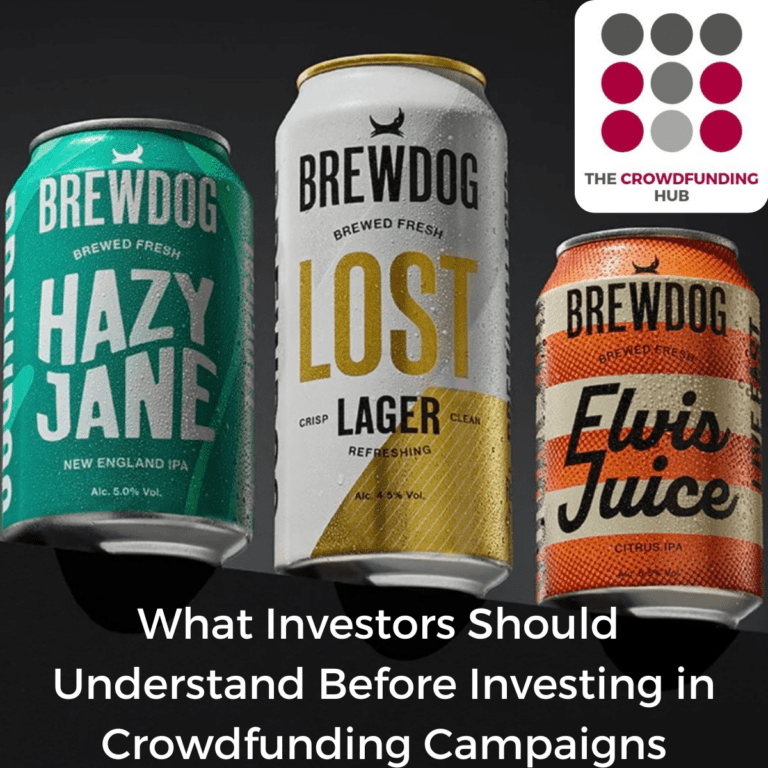
Recent discussions around BrewDog and its Equity for Punks community have sparked an important conversation across the crowdfunding ecosystem.
For many years, BrewDog was one of the most visible examples of community investment working at scale. As the poster child, the brand attracted hundreds of thousands of people who believed in it and wanted to be part of its journey. Customers became shareholders, shareholders became advocates, and that community helped propel the company from a small Scottish brewery into a global name.
At the same time, the recent conversations also highlight something important for investors to understand, investing through crowdfunding is very different from backing a product on Kickstarter or supporting a charitable campaign.
This article focuses specifically on equity or investment crowdfunding, where investors receive shares or other financial instruments in a company and participate in its long-term success. In a future article, I will explore the risks in more detail. Here, I want to focus on the fundamentals you should understand before investing in a campaign.
Understanding the Different Types of Crowdfunding
The word crowdfunding covers several different models. Some campaigns are donation-based, where people support a cause. Others are rewards-based, where backers receive early products or special perks. Investment crowdfunding is different. In these campaigns, as an investor you receive shares or other financial instruments in a company and hope to see financial returns in the future.
The expectations, timelines and risks are therefore very different from rewards campaigns. When you invest in a company, you are participating in the long-term journey of that business.
Early-Stage Investment Requires Patience
Most crowdfunding campaigns involve early-stage or growth companies. That means the investment horizon is long.
It can often take five to eight years, and sometimes longer, before you see a financial return. In BrewDog’s case, the company grew over a decade before major liquidity events occurred, and even then, the outcomes varied across different investor groups.
Early-stage investing is therefore not about quick returns. It is about backing companies you believe in and giving them time to grow. For that reason, investors should only commit capital they are comfortable leaving invested for many years, and possibly losing.
Many seasoned investors see early-stage investing as a valuable part of a well-rounded portfolio. They might suggest putting a small share of their investable assets into private markets, recognising that while individual investments may fail, a successful company can generate significant value.
Investing in What You Believe In
One of the most powerful aspects of crowdfunding is that it allows normal human beings to participate in investment opportunities that were historically reserved for venture capital firms or high-net-worth investors. People often invest because they believe in the company’s mission or already love the product.
Over the years, I’ve often explained the power of this dynamic to founders with a simple example. Imagine a shareholder walking into a pub with friends and proudly saying, “I own this beer.”
That moment captures something important about community investment. Investors frequently become customers, advocates and ambassadors for the companies they support. The connection is one of the reasons crowdfunding can be so powerful. But belief in a company should always be combined with a clear understanding of how the investment works.
Understanding Share Classes
One of the most important concepts as an investor to understand is share structure. In many crowdfunding campaigns in Canada and the EU, community investors receive ordinary shares. As companies grow, they may later raise capital from venture capital or private equity investors who receive preferred shares with additional rights. These preferred shares may include protections such as liquidation preferences or priority returns, meaning those investors may receive their money back before ordinary shareholders if the company is sold or winds down.
These structures are standard in venture finance, but they can affect how returns are shared in future funding rounds or exit events. It’s helpful to understand where your shares sit within the capital structure, essentially, the hierarchy that determines how different investors are treated when money is distributed.
Voting Trust Agreements and Nominee Structures
Many crowdfunding platforms use nominee structures or Voting Trust Agreements (VTAs). These mechanisms allow a single legal entity to represent a large group of investors on the company’s cap table. This simplifies governance and makes it easier for companies to raise future funding.
Whilst you remain the beneficial owner of your shares, voting rights may be exercised through the nominee or trustee rather than individually. Understanding how these structures work helps you, as an investor, know how your interests are represented.
The Role of Crowdfunding Platforms and KYP
Reputable crowdfunding platforms typically conduct a process known as Know Your Product (KYP) before listing campaigns. This may include reviewing legal documentation, verifying founder identities, examining financial disclosures and ensuring the campaign complies with regulatory requirements. KYP does not remove risk, but it does provide a level of screening and transparency that helps you make a more informed decision before investing.
It is also worth noting that a significant portion of BrewDog’s funding was raised outside independent crowdfunding platforms, through its own Equity for Punks program. As a result, the platform-level due diligence and investor protections that exist in many modern crowdfunding ecosystems were not always part of that process. You should consider the structure of the platform and the regulatory environment before proceeding.
Communication is an Important Signal
Another important indicator for you as an investor is how founders communicate. As a crowdfunding investor, you often form part of a company’s community. You may already be customers or supporters, but as a shareholder, you will want to follow the company’s progress and may also receive early access to new products, services or features.
Founders who communicate clearly and regularly tend to build stronger relationships with their investors. Transparency about both successes and challenges helps build long-term trust.
You should pay attention to how companies engage with their communities, both during the campaign and afterwards.
Democratising Access to Investment
One of the most important contributions of crowdfunding is that it has opened investment opportunities to people who historically had little access to early-stage companies.
For the first time, normal human beings can invest alongside professional investors in businesses they believe in.
That democratisation of access is powerful. It allows communities to support innovation, back companies they care about and potentially share in the financial upside.
At the same time, access must always be paired with understanding. Education and thoughtful participation help ensure that crowdfunding continues to grow as a healthy and trusted part of the funding ecosystem.
A Simple Checklist for Investors
Before investing in a crowdfunding campaign, it is worth asking a few practical questions:
- Do I understand what type of crowdfunding this is (equity vs rewards)?
- Am I comfortable with a long investment horizon?
- Do I understand the share structure and where my shares sit?
- Is the campaign hosted on a regulated platform with appropriate due diligence?
- Does the founding team communicate clearly and transparently?
- Do I genuinely believe in the company and its mission?
These questions will not remove risk, but they can help you make a more informed decision.
Investing With Both Belief and Perspective
Crowdfunding allows investors to take part in building companies they care about. It strengthens the bond between businesses and the communities that support them.
The BrewDog story reminds us both the power of this model and the importance of understanding how these investments work. Approach crowdfunding with curiosity, patience and informed expectations, and the companies will benefit more than just capital to grow and you to become a thoughtful, engaged participant in the next wave of entrepreneurial growth.